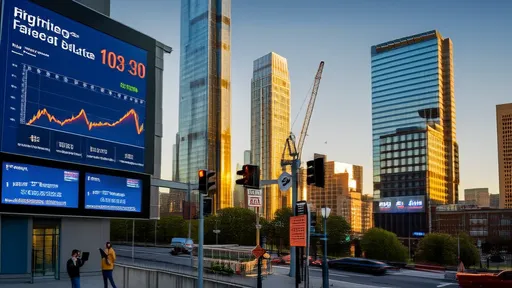
The Chinese stock market has recently witnessed a remarkable milestone as the A-share index surged to its highest level in a decade, sparking fervent discussions among investors and analysts worldwide. This surge, driven by a confluence of domestic policy support, robust economic indicators, and renewed foreign investor confidence, has reignited optimism about the sustainability of China's financial market growth. However, beneath the surface of this record-breaking performance lies a complex interplay of factors that will shape the market's trajectory in the coming months.
One of the primary catalysts behind this rally has been the Chinese government's unwavering commitment to economic stability and growth. Policymakers have implemented a series of measures, including targeted monetary easing and fiscal stimulus, to bolster key sectors such as technology, green energy, and infrastructure. These efforts have not only cushioned the economy against global headwinds but have also created a fertile ground for corporate earnings to expand. Additionally, regulatory reforms aimed at improving market transparency and corporate governance have enhanced investor trust, particularly among international institutions that had been wary of previous market volatilities.
Another significant factor contributing to the market's ascent is the influx of foreign capital. With Western economies grappling with inflation and geopolitical uncertainties, China's relatively stable economic environment and attractive valuations have drawn substantial investments from global funds. The inclusion of A-shares in major international indices has further legitimized China's market in the eyes of foreign investors, prompting a steady flow of capital into equities. This foreign participation has not only provided liquidity but has also introduced a more diversified investor base, reducing the market's susceptibility to domestic retail investor sentiment, which has historically been prone to sharp swings.
Despite the euphoria surrounding the decade-high, questions about the sustainability of this bullish momentum persist. Some analysts caution that the market's rapid rise may have already priced in much of the positive news, leaving little room for further upside without concrete evidence of sustained economic improvement. Concerns about corporate debt levels, trade tensions, and potential policy tightening also loom large. If the government shifts its focus from stimulus to curbing inflation or financial risks, it could dampen investor enthusiasm and trigger a correction. Moreover, the global economic landscape remains uncertain, with factors such as fluctuating commodity prices and supply chain disruptions posing external threats to China's growth story.
Looking ahead, the market's momentum will likely hinge on several key variables. Corporate earnings reports in the upcoming quarters will be closely watched for signs of genuine growth rather than speculative gains. Any disappointment could quickly reverse the optimistic sentiment. Similarly, the government's policy stance will be critical; continued support for innovation and consumption, coupled with prudent regulatory oversight, could extend the rally. On the other hand, missteps in policy or unforeseen external shocks could derail the progress. Investors should also monitor the currency market, as a stable yuan is essential for maintaining foreign investor confidence.
In conclusion, while the A-share market's breakthrough to a decade high is undoubtedly a positive development, it is not a guarantee of uninterrupted growth. The market's future kinetic energy will depend on a delicate balance of domestic policy effectiveness, global economic conditions, and investor psychology. For now, the momentum appears strong, but prudence and vigilance are advised. As history has shown, financial markets are inherently cyclical, and what goes up must eventually face tests of sustainability. Investors would do well to focus on long-term fundamentals rather than short-term euphoria to navigate the uncertainties ahead.

By /Aug 29, 2025

By /Aug 28, 2025

By /Aug 28, 2025

By /Aug 29, 2025
By /Aug 29, 2025
By /Aug 28, 2025
By /Aug 28, 2025

By /Aug 28, 2025

By /Aug 29, 2025

By /Aug 28, 2025

By /Aug 28, 2025

By /Aug 28, 2025

By /Aug 28, 2025

By /Aug 28, 2025

By /Aug 28, 2025

By /Aug 29, 2025

By /Aug 28, 2025

By /Aug 28, 2025

By /Aug 28, 2025

By /Aug 29, 2025
