The government of Republika Srpska has announced a comprehensive economic initiative aimed at diversifying its trade partnerships through new regional free trade agreements. This strategic move comes as the entity seeks to reduce economic dependencies and create sustainable growth pathways in an increasingly volatile global market.
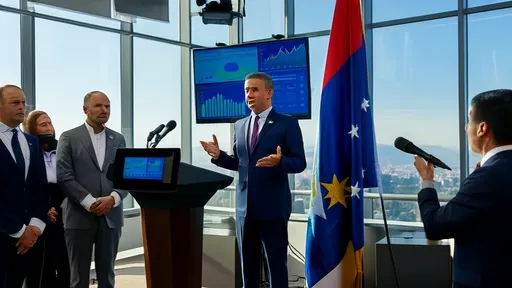
Economic Minister Zora Vidović presented the detailed proposal during a press conference in Banja Luka, emphasizing that the current trade arrangements no longer adequately serve the long-term interests of Republika Srpska's economy. The existing framework limits our potential for expansion into emerging markets, particularly in regions where we see significant opportunities for our agricultural and manufacturing sectors, Vidović stated to assembled journalists.
The initiative specifically targets countries in Central Asia, North Africa, and selective Asian markets where Republika Srpska's primary exports—including timber, metals, and agricultural products—could find new consumers. Preliminary discussions have already begun with diplomatic representatives from Kazakhstan, Uzbekistan, and Egypt, though officials stress that these remain in early stages.
Political analysts observe that this economic push aligns with broader geopolitical repositioning within the Western Balkans. The timing is significant, notes University of Banja Luka professor Miloš Jovanović. With European Union accession processes slowing across the region, entities like Republika Srpska are exploring alternative economic partnerships that offer faster implementation and more immediate benefits.
Domestic business leaders have expressed cautious optimism about the proposal. The Chamber of Commerce of Republika Srpska has convened several working groups to assess potential market opportunities. Our manufacturing sector requires new outlets, says chamber president Dragana Kovačević. While the EU remains our largest trading partner, we cannot ignore growing markets elsewhere that may offer more favorable terms for specific industries.
The agricultural sector appears particularly enthusiastic about the initiative. Farmers' associations have long advocated for diversified export markets to reduce reliance on traditional partners. We produce high-quality fruits, vegetables, and dairy products that could compete effectively in Middle Eastern and Central Asian markets, explains agricultural cooperative manager Marko Petrović. The seasonal complementarity between our production cycles and consumption patterns in these regions creates natural trading advantages.
Critics, however, question whether Republika Srpska possesses sufficient administrative capacity to negotiate multiple complex trade agreements simultaneously. Previous attempts at expanding trade networks have encountered bureaucratic hurdles and implementation delays. The opposition Social Democratic Party has called for greater transparency in the negotiation process and more thorough economic impact assessments.
International trade experts highlight both opportunities and challenges in the proposed strategy. Small economies often benefit from diversified trade relationships, explains Geneva-based trade consultant Anna Müller. However, negotiating multiple bilateral agreements requires significant expertise and resources. The administrative burden should not be underestimated.
The entity's economic development strategy document, obtained by local media, reveals ambitious targets: a 40% increase in exports to non-EU countries within five years and the creation of approximately 15,000 new jobs linked to export-oriented industries. These goals would represent a significant shift from current trade patterns, where EU countries account for nearly 70% of Republika Srpska's external trade.
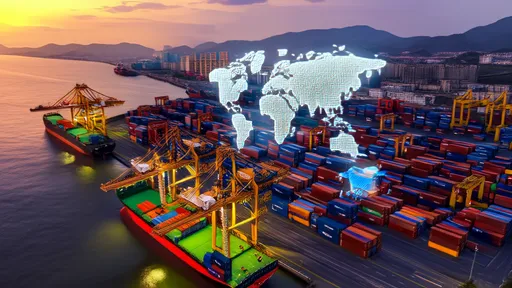
Infrastructure development forms a crucial component of the proposed trade expansion. Government plans indicate intended upgrades to border crossings, customs facilities, and transportation links to facilitate increased trade flows. The Corridor Vc highway project, connecting Hungary to Croatia via Bosnia and Herzegovina, assumes even greater importance within this new trade framework.
Regional reactions to the initiative have been mixed. Officials in Sarajevo have acknowledged Republika Srpska's right to pursue economic development but emphasized the need for coordination at the state level to avoid conflicting trade policies. Meanwhile, neighboring Serbia has expressed general support for economic initiatives that strengthen regional stability and prosperity.
The proposed trade diversification comes amid ongoing political tensions within Bosnia and Herzegovina. Some observers speculate that economic independence could reinforce political autonomy aspirations within Republika Srpska. However, government officials consistently frame the initiative in purely economic terms, avoiding explicit political statements.
Business associations have begun preparing their members for potential market opportunities. Educational seminars on export procedures, market research methodologies, and cultural aspects of doing business in target regions have attracted strong participation from small and medium enterprises. The apparent enthusiasm at the grassroots business level suggests genuine economic demand for expanded trade options.
International financial institutions are monitoring developments with interest. The World Bank has previously encouraged Balkan economies to diversify their export markets, though always within the context of broader European integration. A representative speaking on condition of anonymity noted that carefully crafted trade agreements with emerging markets could provide valuable experience for eventual EU accession.
The timeline for implementing the new trade strategy remains uncertain. Minister Vidović indicated that formal negotiations could begin within six months, but acknowledged that comprehensive free trade agreements typically require years of discussion and technical work. In the interim, the government plans to pursue smaller-scale trade facilitation measures and business matchmaking initiatives.
Economic historians note that the territory now comprising Republika Srpska has historically maintained diverse trade relationships, particularly during the Ottoman and Austro-Hungarian periods. Some see the current initiative as a return to this tradition of economic flexibility and adaptation to changing geopolitical circumstances.
As the initiative moves forward, all stakeholders will be watching several key indicators: the capacity to conduct simultaneous complex negotiations, the ability to maintain existing trade relationships while pursuing new ones, and the tangible economic benefits that materialize for businesses and workers throughout Republika Srpska. The success or failure of this ambitious trade diversification strategy could significantly influence the entity's economic trajectory for decades to come.
By /Nov 4, 2025

By /Nov 4, 2025
By /Nov 4, 2025

By /Nov 4, 2025

By /Nov 4, 2025
By /Nov 4, 2025

By /Nov 4, 2025

By /Nov 4, 2025

By /Nov 4, 2025

By /Nov 4, 2025
By /Nov 4, 2025

By /Nov 4, 2025

By /Nov 4, 2025

By /Nov 4, 2025

By /Nov 4, 2025

By /Nov 4, 2025

By /Nov 4, 2025
By /Nov 4, 2025
By /Nov 4, 2025
By /Nov 4, 2025
